Why Dad’s Last Project

After my Dad died in 2015, I became the administrator of my parents’ estate. Estate is a rather grandiose term for what they had, which was primarily a house and a small amount in a mutual fund. Mom passed away in 2011 and it was now time to liquidate their few assets and sell my childhood home. 

Dad did a lot after Mom died to get his finances in order. When any of my siblings would call or come home (they all live out of state), he would ask if there was something they had their heart on. He wanted to be the one to make decisions so I wouldn’t be caught in the middle later. Overall and compared to other friends or family, the liquidation process went smoothly. 

When people ask me what Dad did that made everything so easy for me. I told them the practical side – he consolidated assets and accounts, he made decisions about what to keep, toss or donate after Mom died, he had me and my brother on all accounts so we could easily access them after he passed away, and most importantly, he spoke to each of my siblings telling them if they didn’t want it, I was being given instructions to sell it, donate it or trash it. Not only did Dad tell me what to sell, he told me how. He said to have an auction and told me to ask my uncle for a reference. That was Dad. He thought through the details, possibilities and alternatives.

About Dad and Mom

My Dad grew up on a farm, served in the Air Force for four years and came back to Minnesota to get married. He worked in a factory for 30+ years before “retiring” and becoming a school bus driver until his early seventies. 

Dad was also a handy guy. He not only taught me how to use a hammer and nails, but showed me how to use power tools and make small home repairs. He enjoyed woodworking creating benches, chairs, cabinets, wishing wells, and so much more. Dad always had a project going. Whether it was something he would sell to friends like bird houses or something for around the house like Adirondack chairs or a spice cabinet, Dad was always creating. 

Mom was the daughter of a blacksmith. She had an associate degree in accounting and worked part-time as an office manager for a small printing company when I was growing up. She took a full-time position in retail after I started kindergarten. Although Mom used to sew many of our clothes, I think in her heart, she really liked working outside the home. She worked in the catalog department for a major department store and then moved into shipping and receiving for 25+ years before “retiring” and then working at the same school bus company as Dad where she served as an aide for bus drivers. She was never an aide on a bus Dad drove. “That is too much togetherness,” she once said. 

My parents were high school sweethearts from a small school in southern Minnesota. Their graduating class was around 50 people. Neither of my parents had fancy degrees or titles or offices with doors in large corporate towers or any of the other things commonly associated with success. Yet, when I reflect back I can easily see the beautiful and simple way in which my parents shaped their lives. 

They were quick to help others and serve in the community where they lived for 50+ years. They raised four children on “blue collar” salaries, and all of us have managed to come out fairly well-adjusted adults (not without our own battle scars of course). Three went to college and have bachelor’s and master’s degrees. One followed in Dad’s footsteps and served in the US Air Force. All of us serve in our communities, continuing that legacy from our parents. 

I am the youngest of the four. There are five years between my next siblings and me. By the time I was thirteen, it was just Dad, Mom and me. In many ways I felt like an only child. There were people who actually thought Dad and Mom had only one child since I was the only one who remained living in our home state. 

I was Daddy’s little girl through and through. I remember going to his workshop and talking to him for what seemed like hours after dinner and before bed. I confided in him my school dilemmas and boy troubles. He showed me his latest project and sometimes let me help. More often, he would just listen while I rambled. It was Dad who took me to my first movie in the theater, brought me in to get my ears pierced and showed me how to drive a manual transmission. I liked being in the yard helping Dad weed our garden or pick up sticks before he mowed the lawn. Time with my Dad was precious then and right up until he passed away. 

My Dad and Mom lived their life as an example to me, the values they instilled and how it all plays out for me today. They didn’t read or follow the advice of any authorities on parenting. They just took the small town values of a farmer’s son and a blacksmith’s daughter to how they raised us, raised me. 

Our story is far from perfect. There were deeply difficult times and several amazing memories. All the good, bad, ugly and beautiful one would expect from a family. Yet, through all of it there was practical advice, lessons learned, a commitment to serve and most of all a deep faith to ground us. 

Although Dad always had some project he was doing, in the end, I think Dad intended his last project to be me. 
The useless performance review

We are at that time of the year – mid-year reviews. When I think about managing people, especially those who might have been in the workplace for a longer period of their life or even Gen Z or Millennials, I believe more and more how antiquated performance reviews are. I’ve always thought they are simply a legal document, a CYA so if you need to lay someone off or fire them, it provides the documentation to do so. It is for those “gotcha” moments. And, I understand we live in a litigious society and we’ve evolved to this place where that documentation is needed.

When I think of my Dad in the workplace, I know he worked hard and he didn’t care about promotions and fancy titles or offices with doors. When he worked the day shift, he was home at night for dinner and would attend my softball or soccer games. When he worked the night shift, he would make me breakfast or kiss me goodbye as I came home from school as he left for work. And those days he worked graveyard, I didn’t really see him at all. I don’t think he cared about meet expectations, exceeded expectations or needs improvement. I think he just wanted to come in, do his job and get on with his life – focus on the things he really valued.

Today’s “blue collar workers” are those in the office. With technology and dynamic economy, the blue collar worker is one who works 8 – 5, with an hour for lunch, sits at a desk, manipulating spreadsheets, writing reports or creating slide decks. They are presenting, selling an idea or project, and pretend that this latest “gadget” is something they about which they are passionate – until they move to a new job and then they start drinking the kool-aid there.

In today’s dynamic workplace, I wonder what value performance reviews offer. I graduated from high school, college, completed a master’s degree, why do I continue to need to be graded – and if I do need to be graded, am I being graded on anything that really matters?

What I feel is lacking in performance reviews is motivating people to perform well based on what will matter at the end of a lifetime. Do you take a moment and congratulate someone on balancing their personal and professional commitments well? Do we celebrate when someone took a moment to step back to bring others along, to help a colleague be successful and build up the team? We measure results, but we don’t always take a moment to acknowledge and appreciate the moments, the moments when someone showed kindness, consideration and gave a person a break for having a bad day.

I am a believer the results will come when you unite a team around the common goal – and the team knows they are there for each other, that each member is more concerned about the others success then their own. So what if we switched the narrative from an individual performance review to a team review? We started to communicate that we want more unity rather than individualism? To show we really believed everyone can lead from their chair and can lead in moment?

Silencing voices

Let’s go deeper into what happens to your team when you have dog syndrome.

Recently at my performance review, my boss at the time told me to speak up more, to use my voice. She said she knows I understand the business and have great insights. She encouraged me to offer those insights in the moment. This is the same person who is rich on criticism and light on praise.

Since that point, I have a new boss and her insecurity has come out. She often feels the need to recite her credentials, her experiences and put others’ credentials and experience down in the process. It is the attitude of “I’ve done this before – bigger and better than any of you.” Her intent isn’t to malign, rather it comes from a place of needing to prove herself, let us know she is worthy of our respect and trust.

In both of these cases, the last thing I want to do is compete. I can compete in bowling or a board game. And in my youth my competitive streak ran deep on the soccer or softball field. I was fiercely determined in high school and college academically. It was well known when I set my mind to something, it got done. It was done well and I won.

That same fervor isn’t there for me in the workplace especially I now work in an organization that really does have a greater purpose – something in which I believe. That makes the work more rewarding. And, all the more reason I don’t want to compete with my colleagues or my boss.

And so when the insecurity comes out in my boss, I just let it go. I do as I am told and walk away. I go home and snuggle my furry pals. My voice is silenced by someone else’s insecurity. I don’t compete with that gaping hole in someone else’s life because I can’t fill their cup. I can listen, I can advise and coach, and I can affirm. But, I won’t compete for space or go to battle over non-substantive matters. My voice will go silent not because I am weak, but because the “care” has been driven out of me. I play the political game, then close down and move on.

I’m not alone in this behavior. How many of us have heard our friends or family say, “I just go to work and do what I’m told.” My Dad use to say that. He and many others have chosen to silence their voice rather than compete. When really, what I or anyone else wants is the thrive through collaboration, knowing our thoughts, battle scars and life learnings are valued and needed. We want to contribute, but instead ego gets in the way and we go silent.

I will never understand how some of the most insecure people I’ve met tend to also be in top leadership roles in companies. What did someone see in them because from here in the trenches, it doesn’t make sense. And some of the best people I know, whose voices have been silenced, could show up and lead from a place of practical experience, intellectual curiosity and empathy since they have been there, in the trenches. They know. They could be those blue collar leaders.

The say the cream doesn’t rise to the top and what I have described is a vicious circle – the ones who lead are the ones who silence those who could and likely should. How much are losing in not encouraging people to live to their fullest potential. How is that circle broken? I’ll let you know when I figure it out. But right now, I’m going to snuggle my fur babies.

Overcoming the dog syndrome

After watching my Dad and in my twenty some years in the workplace, mostly spent as a middle manager, I found that executives are also human. And that comes with all the frailty humans bring into their interactions with others. This includes self-doubt, wanting to prove themselves and a desire to be valued for the gifts and talents they bring to the table.

On the other side are the people they manage who have those same desires. Often to them, however, success isn’t measured by a title or salary, it is by getting shit done. Checking off the list and moving onto the next thing. This doesn’t mean they don’t want to understand or even be part of the development of the strategy. They do – and they want to see the results of those efforts. They want to experience the thrill of the strategy being executed and obtaining goals. They want to get shit done.

These might be individual contributors like my Dad was or they could be middle managers like me. When these two levels come together – the middle manager or individual contributor and the executive – there is bound to be conflict.

Sometimes the conflict is on the how, and more often is it on the what. Newer leaders often say, “hey, what if we did xyz?” and portray it as an original idea, as their own. When in reality, last week or even last year, the middle manager or individual contributor did just that or even mentioned we should do xyz. However, the newer leader or executive needs to leave their imprint. To put it bluntly, like a dog, they need to piss on another’s work or ideas to establish their territory.

It doesn’t take much to realize how demotivating this is to the team. I’ve seen it happen. The team disengages, doesn’t feel empowered and just waits to be told to do the next big “original” idea that is going to ‘fix’ what is broken. In the meantime, the team moves blithely along doing what works for them because even if they did want to contribute differently, it would be devalued or stolen as an executive initiative.

It is obvious as I write this to see that this behavior isn’t helpful to grow, expand or motivate people or evolve an organization. What should be done? First, start by releasing the ego. This is the first, and hardest thing for executives to do. They reached the heights they did because of their egos and to let go of that, to take a more servant leader approach, is threatening to them. It means change – and for as much as executives talk about change management they aren’t good at it – especially when one of life’s main (de)motivators gets in the way – fear. Fear of losing their job, fear of not looking smart and fear of not looking capable. Fear is behind the executive leaders behaviors – including behaving like a dog and staining their territory.

To overcome the dog syndrome is to be self aware and curious. Be aware when you as an executive leader are peeing on your team. How do you do this? Before spewing an idea, ask your team and be curious. “What do you think if we…” Or, I’ve noticed you’ve been doing things this way and it looks more complicated than it needs to be. Is that a right observation? What would help you do your job better?” And the all time classic, “Have you all ever done this before?”

This simple starting point of curiosity will acknowledge your teams competence, without diminishing yours. It also is a step to inviting your team into new ideas or changes, making them not just part of the solution, but part of the ideation, growth, evolution. You’ll ignite a spirit of possibilities to get to the heart of their motivation – getting shit done.

Not only will you bring out the best in your team to move your organization forward, you will also bring out the best of yourself.

A Culture of And

I switched jobs at the beginning of the year. I liked my previous job and the company, and it was time to move on. And. It is a word I am using more these days.

I left and came back to my previous company. My dad was glad I went back. He didn’t say it at the time, but he thought I left too soon after Mom’s death. Going back provided me stability. It was a good run. Yet, my previous company was a deeply patriarchal, intensely political, public, Fortune 500 company. It was driven by profit, at the expense of the people – no matter how many times they said people mattered. It is was also a “but” company.  

A ‘but’ company looks for fault. Someone presents on a project. The leadership looks for what is wrong, poking holes which stops forward movement. The presenter then reworks, revises and re-presents a multitude of times, answering all the ‘buts,’ yet never getting the yes. A ‘but’ company is not prone to taking risks nor does it help people reach their fullest potential.

That is how I felt for years – always hitting the ‘but’ and not moving. The numbers proved that out as well. For the last four years, the division I worked in experienced slowing growth, and in some areas contraction. The ‘but’ prevented the company from investing in newer technologies, procedures or training. The ‘but’ stops, not starts.

I now work for a Fortune 500, non-profit services company. The CEO is a woman, the division in which I work is also led by a woman. The people are kind, collaborative as well as supportive. And, it is an ‘and’ company. An ‘and’ company validates your opinions, builds on your original thinking or initiative and progresses. An ‘and’ culture makes a plan, works the plan and asks, what else? It is forward thinking. The ‘and’ starts conversation, builds momentum and allows great minds to flourish.

Moving to an ‘and’ company has been a shift for me, and it is a culture I like. I find I do not get caught in this spiral into nothingness. I am beginning to shed the layers of protectiveness and armor and sink into this culture of ‘and’. It is liberating, and a bit scary.

A culture of ‘and’ means accountability. There is nothing to hide behind, no lack of leadership to blame. A culture of ‘and’ demands that people step up, try, fail quickly, learn and move on. And, it is a culture of freedom. I can bring thoughts, ideas to the table. I don’t need to have the details fully fleshed out because I am one in a group of smart people, each bringing diverse talent and skills to the table. Unlike a ‘but’ culture, I am not alone or commiserating with other. I am an ‘and’. And you. And us.

I am still growing into this new role, this new culture. And I think my Dad would be proud that I found my space, feel like I can reach my potential. I am coming into my own. I like it. I like the liberation from buts, moving into the space of ands. I now catch myself when I am about to say, ‘but’ and quickly think, how can I make this an ‘and’. How can I share in and be part of this beauty to bring the best of myself to the table, and create the space and opportunity for others to do the same? An ‘and’ culture works, and that is exciting.

Five Years & Father’s Day

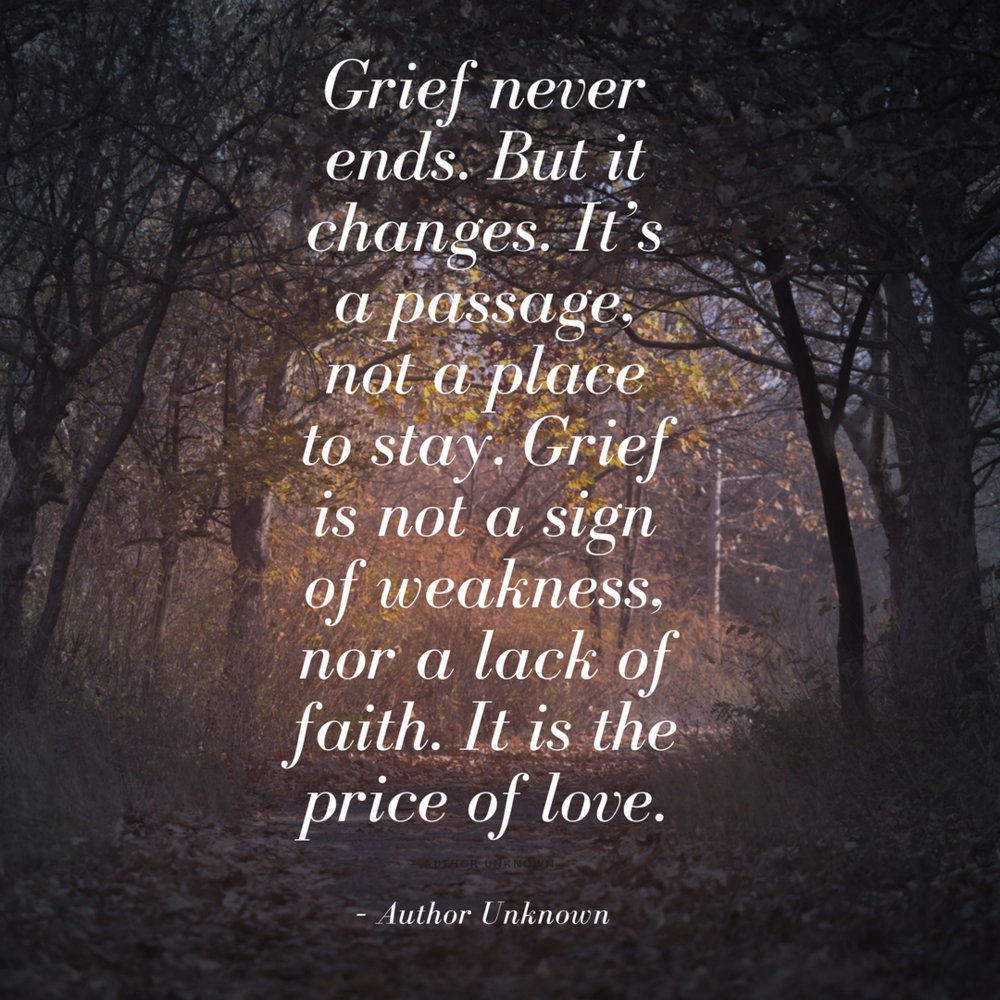
Today is Father’s Day and June marks five years since my Dad died. I’m not sure how I am “suppose” to feel about that. I often see people on social media post their grief or “miss you every day,” with some happy picture. But I can’t say I miss Dad every day, because I don’t. What I am, the feeling in the deepest part of my heart, is grateful. Grateful that God chose my Dad to be my Daddie.

There is a societal expectation (or so it seems) that one should be in a mourning on particular days or milestones, such as noting five years since a death. I did note the day. How could I forget that day? Or the days preceding his death? I don’t, and am I sure others don’t either. But to be in despair, to cry or feel the need to formally or symbolically publicly show those feelings isn’t what I want to do, rather feel I have to – as if I am reinforcing the belief my siblings vocalized or portrayed, that I am a bad daughter. So I posted the token picture on Facebook, but in my heart there wasn’t the need.

I learned a lot from my Dad. He have a gift of hospitality and welcome, which he shared generously. He was strong and gifted as a carpenter and handyman, not unlike Joseph, Mary’s husband and Jesus’s earthly father. He was kind, but could be scary with his deep bass voice when he yelled. He was my Dad, and like all of daddy’s little girls, I was proud of him.

On those days of note, the anniversary of his death, Father’s Day and just around the corner his birthday, I remember and my heart overflows. My heart overflows with joy, with gratitude and with love. For I was loved, very deeply and unconditionally.

Betrayer or Betrayed?

This holy week, I’ve been drawn Judas. My heart hurts for him. He was called by Christ, not unlike the other 11. And his role in betraying Jesus is well documented. John’s gospel also tells us that he held the money and was “skimming off the top,” to use today’s terminology. Not the best role or legacy.

But let’s take a new lens to Judas. He was weak in faith and therefore susceptible to Satan and his deceptive ways. The gospels tell us Satan had a hold on him that hopefully none of us will fully know. And so when his doubts were coupled with Satan’s manipulation, his guard was down. So what did he do?

He went to what he knew – his church and its leaders. Instead of being a mirror to Judas and counseling him, what did they do? They took advantage of his weakness for their own ends. They knew he was monetarily motivated and so with 30 pieces of silver, they bought his soul and sealed his place in biblical history.

After hearing that Jesus had been condemned to death, the gospel of Matthew tells us that Judas was .filled with remorse. Again he went to those who were his church leaders saying, “I have sinned in that I have betrayed the innocent blood.” (MT 27:4) How did those leaders respond? Did they offer help, compassion or empathy? Did they offer forgiveness? No. They responded, “what is that to us?” (MT 27:4). Judas throws the silver at them and leaves. We know what he did. We know where he went. His heart was broken beyond his ability to repair. He was so filled with grief and remorse, he went to a field with rope. He found a tree. He looped the rope around a strong branch on the tree and wrapped the rope around his neck. He then fell and hung himself. But what if…

What if Judas instead of going to the church leaders had gone to Christ. What if he begged at the foot of Christ hanging on the cross and asked for forgiveness? How would Jesus responded? Would he rejected him? Would Jesus let himself die on the cross without healing Judas’s heart? We know that wouldn’t have happened. Not unlike Jesus offered forgiveness to the criminal hung beside him, he would have given grace and forgiveness kneeling before him. He would have healed the broken heart and renewed his soul.

Imagine how different history would have been? Imagine the story Judas could have told. “Look, it was my betrayal that put Jesus on the cross. He wouldn’t have been there had I not sold out for 30 pieces of silver. And you know what, he forgave me! He stitched my broken heart back together. Man, if he can do that for me, believe he will do the same for you. Have faith. Trust him.”

When I had thought about this alternative path for Judas, I truly stopped during a walk and got teary. I said out loud, “Oh Judas. If you had only believed and trusted in the one who chose you, your story could be so different. If only…”

Today take a moment and look around. Think about how a life could be made different through forgiveness and grace that Jesus can offer – or you can offer on his behalf.

The Other Sacrifices Made

When I was a child, it was my responsibility to set up the nativity scene at Christmas. One of the figures in our set is the donkey. My dad often said to me, make sure he is near the hay. He’s earned his food.

As an adult I reflected on that wisdom from my Dad. The donkey carried a nine-month pregnant woman across the country in the heat, with limited water and likely little food. He had earned his keep. This led me to think about those other characters, others who helped but really weren’t acknowledge, and in some cases even mentioned in the gospels stories.

Today is Good Friday 2020. We are still in quarantine due to COVID-19, but I’ve been listening to the scriptures and reflecting on that moment when the crowd cries out and ask that Barabbas is freed, opening the path for the crucifixion of Christ. Tradition and scripture tell us Barabbas was a notorious prisoner, possibly part of the insurrection against Roman rule. And in the gospels of Mark and Luke, we are told he committed murder.

Knowing that Barabbas committed murder gave me pause, and I thought about the family and friends of the people Barabbas killed. They aren’t mentioned; we don’t even know who Barabbas murdered. But those people, those unmentioned in scripture or history, had to feel something about Barabbas’s release.

Having just come out of the grief of the loss of a loved one, believed that in Barabbas’s arrest there was some justice being served. Now he was on the streets again. Were they worried he would come after other members of their family? Would they lose another love? Would they start the cycle of grief and tears again?

My heart hurts for those people whose sacrifices are silent. Their stories and place in the gospel story, their critical role in the fulfillment of the glorious story of Christ’s death and resurrection shouldn’t go unnoticed. And I hope that by writing this, they are not forgotten. Their role may have been minor, but their fear, anger and feelings of injustice with the release of Barabbas was likely very real.

We are told in the beatitudes that “Blessed are those who mourn, for they will be comforted. (MT 5:4). History may have not noticed those who suffered because of Barabbas’s deeds, but God won’t and hasn’t. And hopefully, neither will we.

No Ordinary Sunday

I find that in the midst of COVID-19 and #stayathome orders, I am reverting to behaviors I discovered and developed while I lived overseas my junior year of college as well as later in life for work. The moments and traditions I treasure can’t be captured or created in the usual way, so I don’t try. I think about how can I make this different, fulfilling in a new way given the new circumstances.

Today is Palm Sunday, the holiest week of the year for those who follow Christ. For me, it is my absolute favorite time of the year. The liturgy is rich with nuance and meaning, the readings hold the essence of our faith and the music, oh the music. Let’s just have a humble brag and say the my choir knocks it out of the park. I love this time of the year. You can have Christmas, I’ll take Lent, through Palm Sunday, Easter, and right up to Pentecost. It nourishes and fills my soul.

It isn’t a wonder that not being able to experience Palm Sunday and Holy Week in my usual way has me feeling unbalanced and unfulfilled. But last night I was thinking that I had to create something to move me. I couldn’t grieve the loss. Rather I needed to create something new. Something that would make this year stand out as different, because it is.

I’ve tried watching the Mass online but it just doesn’t do it for me. As a Catholic, Mass is all about community and participation. To simply watch and individually participate at home doesn’t work for me. Even if I was in a room with family or friends, I still think it wouldn’t fulfill me.

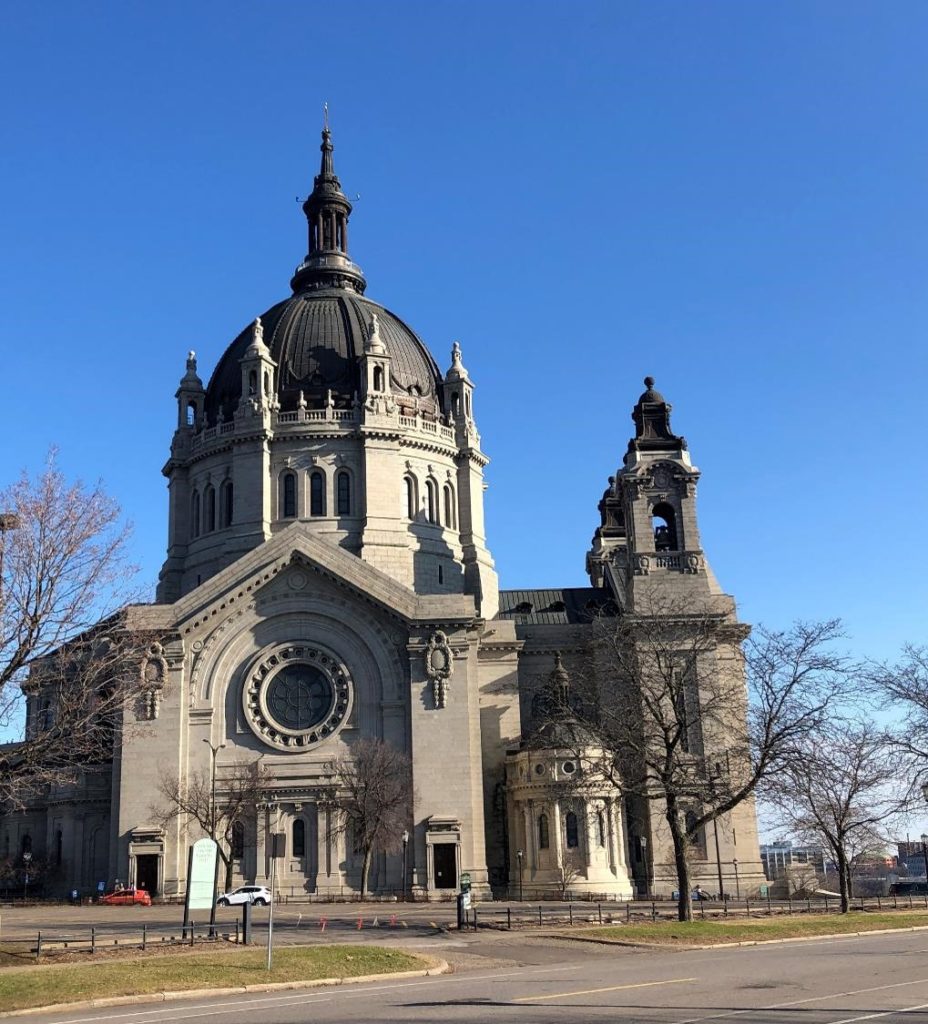
This week, I prayed and asked, what can I do to start this holiest of weeks in a way that is going to put me in the right state of mind and fill by heart. Fortunately I live close to the Cathedral of St. Paul, in St. Paul, Minnesota. As a national shrine, the Cathedral has been formally recognized for its special historical, cultural and religious significance. It is our “local” place to pray outside of Rome. And on Palm Sunday, they would be outside distributing palms from 9am – 11am. I felt it pressed on my heart to “make a pilgrimage” to the Cathedral.

Cathedral of St Paul Minnesota
Cathedral of St. Paul, St. Paul, MN

I pulled on my coat and gloves, put in my ear buds and listened to today’s scripture readings as I took the 20 minutes walk uphill to the Cathedral. I arrived fairly close to 9am. Two priests were outside handing out baggies of palms. I was at that time the only one to have walked up. I’m sure I wasn’t the last as the Cathedral is very much in the neighborhood.

As I listened to the scriptures during my journey, I felt incredibly moved – I thought about the victims of the criminal Barabbas and the pain felt at his release. I thought about Judas, going to the chief priests to return the silver, I thought about the crowds crying out “crucify him. “

After receiving my palms, the priest asked me if there was anything else he could do for me. I asked for a blessing, which he graciously offered. The tears at that point began to fall from my eyes and down my cheeks. I turned and began my walk home.

Along the way, I saw a tent of a homeless person and another person with a sign asking for money. I so wanted to open my little baggie and offer a palm. But I didn’t. What held me back from that simple gesture of prayer to another human? Was it fear – not fear of personal harm, but fear that it wouldn’t matter or make a difference. They would just simply cast aside my palm seeing it at something not practical that they can use – like clothing, a blanket or even cash. Again, I wept for my own lack of courage.

I came home and made a cross and a heart from my palms. I taped them to my windows and the sunlight powers through the branches as I write this. And my mind continues to whirl with thoughts. Palm Sunday. Not what I expected, but certainly one I won’t forget. Amen.

Roll Away the Stone

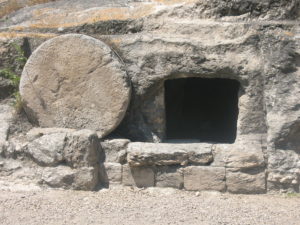
Today is what my choir friends and I call Roll Away the Stone Sunday, named after the song by Tom Conry. The gospel is John 11: 1-45 in which Jesus travels to Martha and Mary’s because Lazarus has died.

The first time we sang this song, we repeated the refrain many times. We were captured in the moment and it felt right, spirit led to sing those words over and over, “Roll away the stone and see the glory of God. Roll away the stone.” It was as if our voices were willing the stone to move. It wasn’t forceful, it was faith-full. As we repeated the refrain again and again, out of seemingly nowhere, we hear our soloist cry out, “Lazarus, come out!” It was one of those powerful moments when chills run down your back and the hairs on your arms stand up. Even as I write this, I remember the sensation of that moment.

We haven’t been able to recreate that specific moment, but we relive it every time we hear that scripture reading and sing this piece. “Roll away the stone and see the glory of God. Roll away the stone.”

As we are staying home to protect others and ourselves during this COVID-19 pandemic, I was reflecting on this song. “Roll away the stone.” It isn’t a huge leap to start to wonder, what stones has God rolled away in my life and allowed me to see the glory of God?

To cover them all – the stones, the pebbles or rocks – is a long winding road. Many have heard the stories, some are part of those tales. Needless to say (but I’ll say it anyway) there is not a stone in my life that God hasn’t removed, allowing me to not only see but to deeply experience God’s glory in miraculous as well as tiny, every day ways.

Each year, I pick a theme rather than make resolutions. I have been doing this long before it was cool and trendy. My theme for 2020 is Glorious Unfolding, from the song by Steven Curtis Chapman (yes, music is a theme in my life). The song speaks to allowing God to unfold wonders in my life, just to trust in the journey. It calls me to stop doing what I am well known for doing – planning and being freakishly efficient and organized. Lately, I have found myself drifting back into that pattern, especially amid the stay at home order. I make my lists, I cross off items and continue to feel that sense of accomplishment.

Yet, despite the fear and unknown of this virus, I feel called to slow down. And, that is a blessing. I’ve been moving very fast for about the last five years. But now that I have settled into my home office and adjusted to the temporary moment of physical distancing, I am called to be still, to take in and to see the Glory of God.

I will miss singing this powerful song this weekend with my friends, my spiritual family. Yet, not singing has forced me to pause, to relive in my heart a powerful moment and remember the stones God has rolled away – not just for me, but for those around me. Now I ask God to reveal to me what I have yet to learn as I take this time to pause. “Roll away the stone and see the glory of God. Roll away the stone.”